For long-haul drivers and transport operators running continuous shifts, the concept of "staying on schedule" often becomes an invisible pressure. The stress of maintaining timelines, reputation, and revenue leads many drivers to push through back-to-back trips, eat poorly, and forgo adequate rest. While the vehicle may depart on time for now, the long-term cost is far from insignificant.
Accumulated fatigue slows reflexes and diminishes the ability to handle road situations. Consequently, risks on the road quietly escalate with every kilometer traveled. This is not just an individual story; it is a common reality in long-haul transport, especially during peak periods like the Lunar New Year.
This "just a little longer" mentality is also very evident in vehicle maintenance, particularly regarding batteries. When a battery begins to weaken, the vehicle might still start and operate normally for days or even weeks. This easily creates a false sense of security, leading to the postponement of maintenance and replacement. However, unlike other mechanical failures that show clear warning signs, battery failure often occurs quite suddenly. Just a single breakdown in the middle of a journey is enough to cause severe delays, impacting the schedule, the transport company's reputation, and resulting in unwanted towing and repair costs.
Experience shows that many short-term "savings" end up becoming much larger expenses later on. Hesitating to replace a weak battery might save money upfront, but the risk of journey disruption is always looming—especially for trucks, passenger buses, and tractor-trailers. These are high-intensity vehicles that carry heavy loads and rely heavily on electrical equipment.
A sustainable solution does not lie in trying to "push a little further," but in a mindset of proactive prevention. This starts with looking after the driver's well-being and arranging reasonable rest periods, while simultaneously keeping up with scheduled vehicle maintenance. In this regard, the battery plays a foundational role, ensuring a stable power supply for the vehicle's entire electrical system.
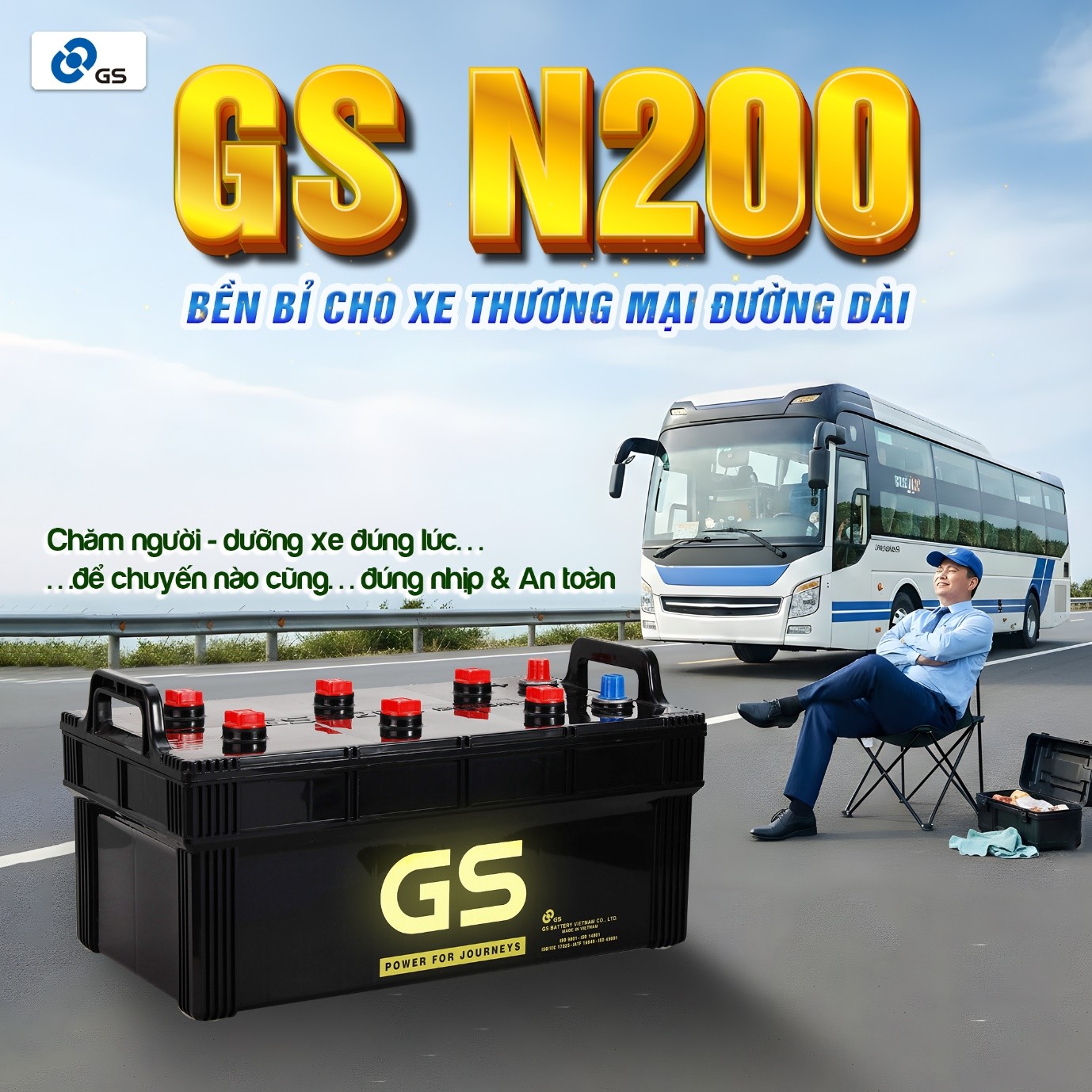
For long-haul commercial vehicles, selecting a heavy-duty battery with high capacity is a critical factor. The GS N200 (12V – 200Ah) battery is specifically designed to meet the demands of continuous operation, offering stable charge-discharge performance and high load endurance. As a result, vehicles can minimize unexpected electrical failures, especially during multi-day journeys or under harsh operating conditions.
What is worth noting is that investing in the right battery does not just reduce the risk of mid-journey breakdowns; it contributes to the stability of the entire trip. When the electrical system functions smoothly, drivers can have greater peace of mind, and transport companies can more easily manage their schedules and operating costs.
In the long run, looking after the driver's well-being and proactively replacing the battery on time is not an expense, but a necessary investment. It is the way to ensure every journey remains on track, safe, and resilient.